


Tesla Killed Its Model S Line to Build Robots. What's Actually Confirmed vs. Hype.
Tesla decommissioned Model S and X assembly lines at Fremont to install Optimus production. Here is what is verified, and which widely-repeated numbers do not hold up.
The short answer
Tesla removed the Model S and X assembly lines at Fremont and installed first-generation Optimus production in their place, with output going live in late August 2026. Tesla's stated hardware specs and its $20,000-$30,000 pricing target are real claims, but widely repeated cumulative deployment numbers do not hold up against company filings.
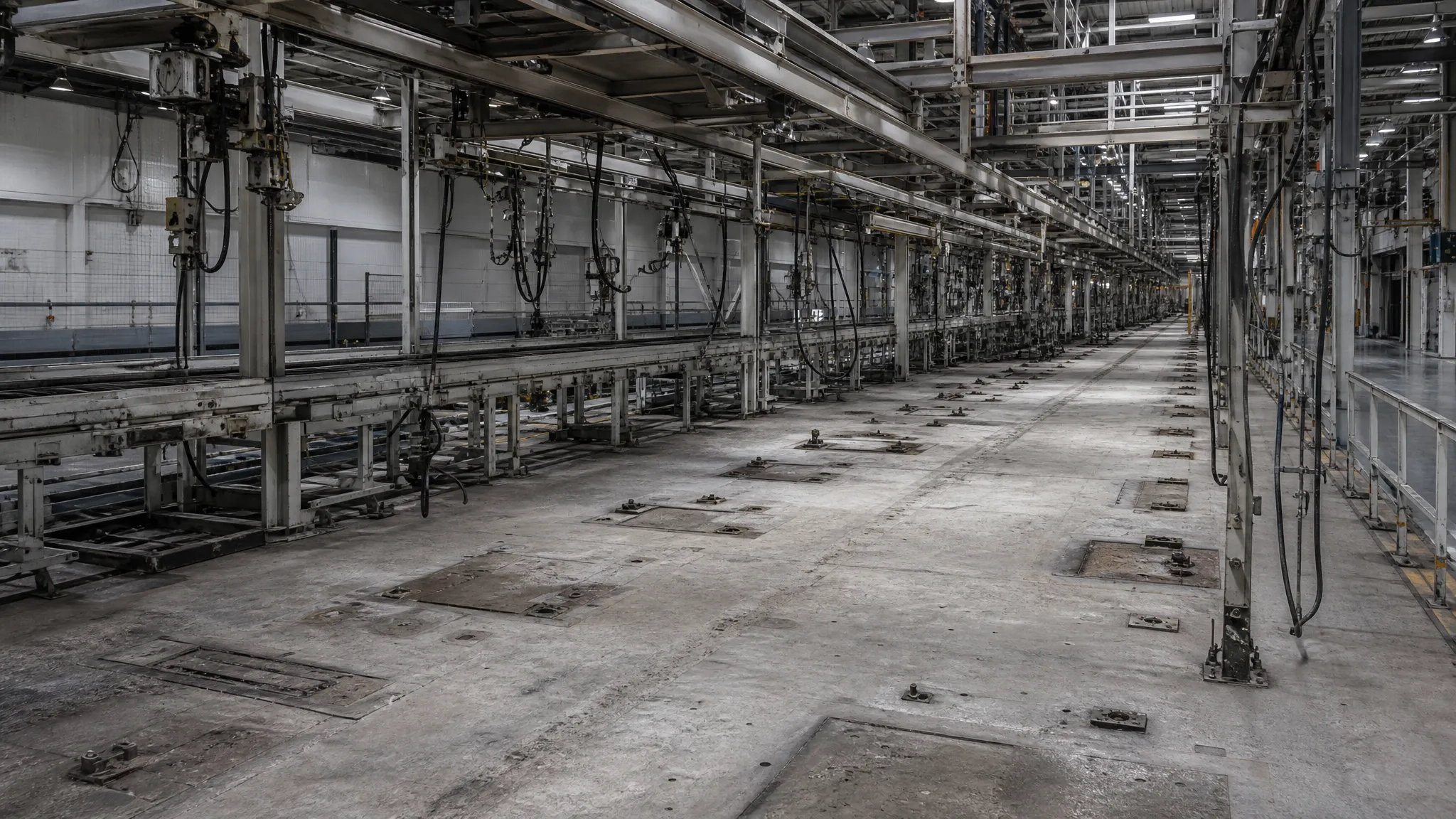
Tesla decommissioned its Model S and Model X assembly lines at Fremont and installed first-generation production lines for Optimus in their place. That’s an unusually concrete signal — companies don’t tear out functioning production capacity for a product they’re unsure about. It’s also where the confirmed part of this story mostly ends, and the widely-repeated part starts getting shakier.
What’s actually verified
The Fremont conversion happened. Historic Model S and X lines came out; humanoid production lines went in. Production went live at Fremont in late August 2026, after Tesla’s own guidance had pointed to late July or August — roughly on schedule by the standards of a program that has slipped repeatedly.
The hardware specs are consistent across sources. Tesla reports Optimus at 173 cm tall, 57 kg, with 40 degrees of freedom, able to deadlift 68 kg and carry 20 kg dynamically. That positions it in the consumer and light-industrial tier — not heavy manufacturing.
The pricing target is stated, not achieved. Tesla projects $20,000-$30,000 at production scale. “At production scale” is doing real work in that sentence; it’s a target contingent on volumes that don’t exist yet.
What doesn’t survive a closer look
Here’s the part most coverage skips. Search for humanoid deployment figures and you’ll find confident numbers — Tesla has passed 50,000 cumulative Optimus units, that sort of claim. Analysis comparing those widely-circulated figures against actual company filings finds they don’t hold up.
More pointedly: on verified deployment records, Figure and Agility are ahead of Tesla, not behind it. Figure manufactured its 1,000th Figure 03 at BotQ in late July, sustaining roughly one robot per hour. Agility holds comparable verified records. Tesla’s advantage is manufacturing capacity and brand attention — not demonstrated deployment.
And on raw volume, neither leads globally. Unitree ships more humanoids than any Western competitor at roughly a tenth of the price, and China accounted for something like 97% of global shipments in the first half of 2026, with AgiBot the volume leader at 15,000 cumulative units.
How to read any humanoid announcement
The pattern that keeps repeating across this sector is worth internalizing, because it’ll apply to the next dozen announcements too:
- A prototype demo is not a product. Public demos are a starting point, not proof. What matters is repeat runs in messy real workplaces, with clear safety rules and defined human handoff steps.
- “Announced” and “shipping at scale” are separated by a wide gap across basically every manufacturer in this space, not just Tesla.
- Ask for evidence from comparable tasks, environments, and operating hours. A robot that performs well in a controlled demo tells you very little about performance in an actual warehouse with unpredictable lighting, obstacles, and exceptions.
- Valuations are running ahead of deployment. Figure held a $39 billion private valuation as of September 2025 — higher than Goldman’s projection for the entire humanoid market nine years out. That gap between capital and installed base is the sector’s defining feature right now.
Why this matters even if you’ll never buy one
Most developers and small businesses won’t deploy a humanoid robot in 2026, and that’s fine — the more useful observation is that physical automation creates a service layer around it. Process mapping, safety documentation, computer-vision data work, maintenance coordination, training design, interface work, and privacy/IP advisory all become real demand as these deploy.
The practical version of that: a “robot readiness audit” is a sellable service today, mapping tasks, exceptions, data exposure, staff handoffs, and pilot economics for a warehouse, clinic, or manufacturer. That’s a business you can build before the hardware question resolves, and it doesn’t require betting on which manufacturer wins.
What to watch next
Optimus Gen 3 targets a production launch applying Tesla’s Full Self-Driving neural networks and Dojo supercomputer. The question worth tracking isn’t whether Tesla can build robots — Fremont answers that — but whether the software generalizes from driving to manipulation. Those are related problems, but they are not the same problem, and treating them as interchangeable is the most common analytical error in Optimus coverage.
Official reference: Tesla’s published Optimus specifications, Counterpoint Research via South China Morning Post on China’s shipment share, and Technology.org’s analysis of verified deployment figures versus company filings, all current as of September 2026. Deployment numbers in this sector move fast and are inconsistently reported — verify against primary filings before citing any figure elsewhere.
Frequently asked questions
- Did Tesla actually replace the Model S and Model X lines with Optimus robots?
- Yes. The historic Model S and X lines came out of Fremont and humanoid production lines went in, and production went live at Fremont in late August 2026, roughly on schedule against Tesla's own guidance of late July or August.
- How many Tesla Optimus robots have actually been deployed?
- Confidently circulated figures such as 50,000 cumulative units do not survive comparison with actual company filings. On verified deployment records Figure and Agility are ahead of Tesla, and Unitree ships more humanoids than any Western competitor.
- What are the Optimus specs and how much will Tesla's robot cost?
- Tesla reports Optimus at 173 cm tall and 57 kg with 40 degrees of freedom, able to deadlift 68 kg and carry 20 kg dynamically. It projects a $20,000-$30,000 price at production scale, which remains a target contingent on volumes that do not exist yet.